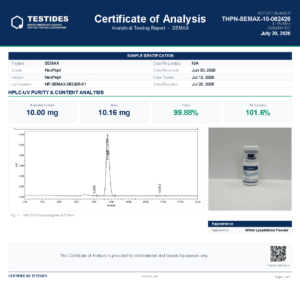
HPLC + MS
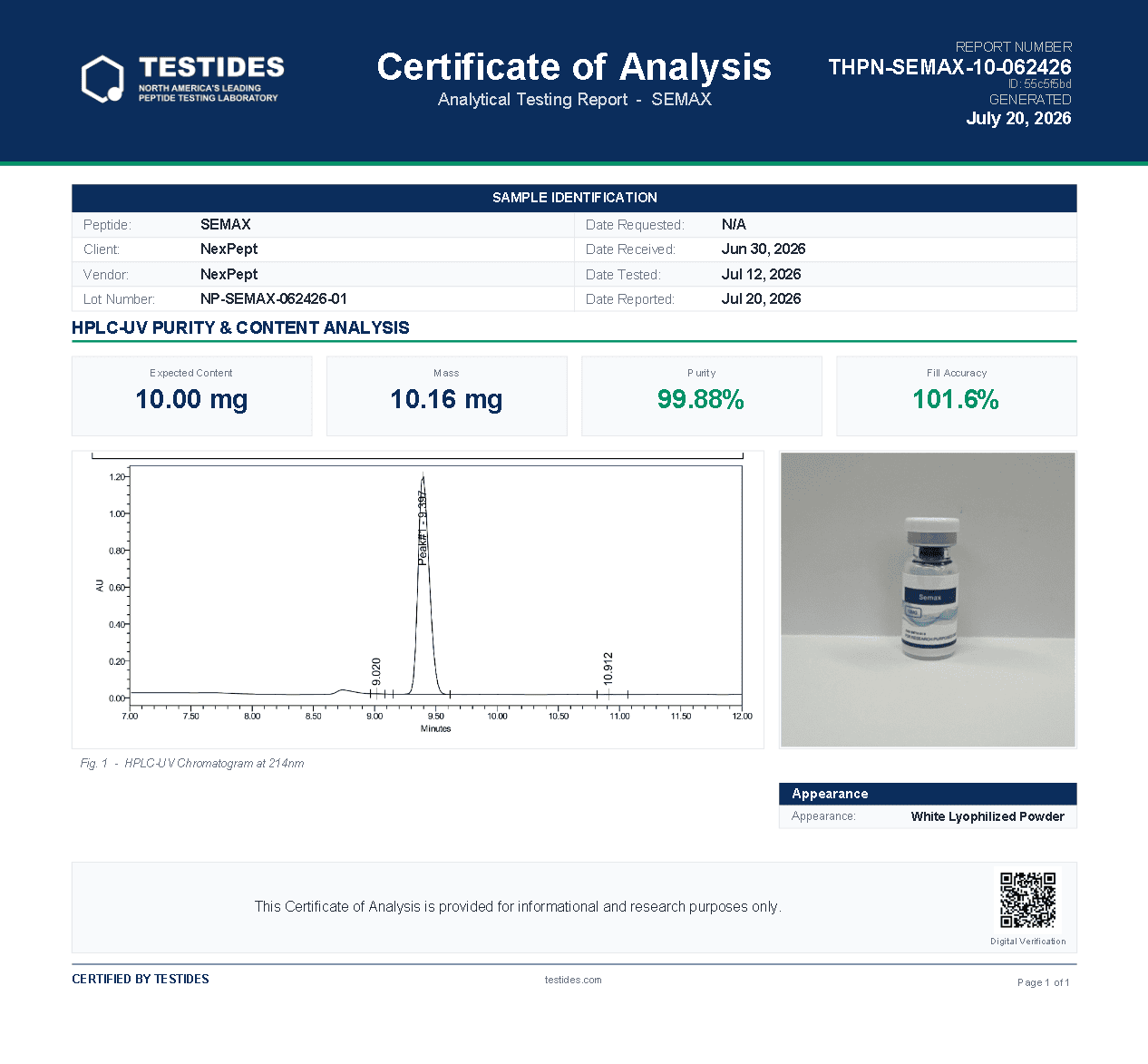
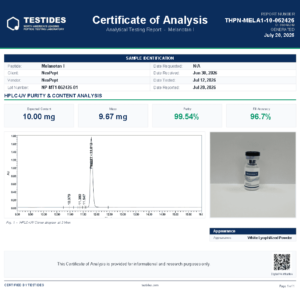
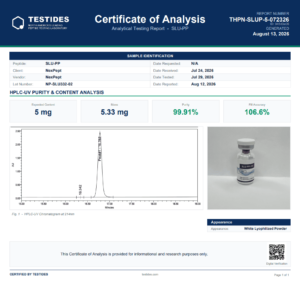
Independently tested for identity and purity
NP-SEMAX-062426-01
Jul 20, 2026
99.88%
View Certificate of Analysis
CAS# 80714-61-0
Also Known As ACTH(4-7)-PGP
Class Synthetic Neuropeptide / Melanocortin Receptor Analogue
Form Lyophilized Powder
Receptor Target
Peptide Length
Molecular Weight
Semax (CAS# 80714-61-0) is a synthetic heptapeptide analogue derived from adrenocorticotropic hormone fragment ACTH(4-7), extended C-terminally with a Pro-Gly-Pro (PGP) tripeptide to yield the full sequence Met-Glu-His-Phe-Pro-Gly-Pro (MEHFPGP). It is studied in preclinical and in vitro models investigating neuropeptide signalling, melanocortin receptor (MC4R) interactions, and neurotrophic factor pathway modulation — including BDNF and NGF expression studies in hippocampal and cortical cell preparations. Supplied by NexPept as a lyophilized powder for in vitro laboratory research use. This compound has not been authorized by Health Canada for any therapeutic, clinical, or human use.
Molecular Profile
CAS#, sequence, PGP modification, molecular weight, analytical data
CAS#, sequence, PGP modification, molecular weight, analytical data
| Property | Value |
|---|---|
| CAS Number | 80714-61-0 |
| Research Designation | Semax; ACTH(4-7)-PGP; Heptapeptide |
| Compound Class | Synthetic neuropeptide — melanocortin receptor analogue |
| Full Sequence (3-letter) | Met-Glu-His-Phe-Pro-Gly-Pro |
| Full Sequence (1-letter) | MEHFPGP |
| Parent Fragment | ACTH(4-7) + C-terminal Pro-Gly-Pro (PGP) extension |
| Sequence Length | 7 amino acids (heptapeptide) |
| Molecular Formula | C₃₇H₅₁N₉O₁₀S |
| Molecular Weight | ~813.9 Da |
| Primary Research Target | MC4R (Melanocortin 4 Receptor) — Class A GPCR; Gαs-coupled |
| Physical Form | Lyophilized powder |
| Analytical Method | High-Performance Liquid Chromatography (HPLC) + Mass Spectrometry (MS) |
| Appearance | White to off-white lyophilized solid |
In Vitro Research Context
Neuropeptide signalling & neurotrophic pathway models — laboratory use only
Neuropeptide signalling & neurotrophic pathway models — laboratory use only
The ACTH(4-7) parent fragment Met-Glu-His-Phe is extended C-terminally by the tripeptide Pro-Gly-Pro to yield the full Semax sequence MEHFPGP. The flanking proline residues confer resistance to exopeptidase cleavage — a property studied in neuropeptide stability models. Critically, the PGP tripeptide has independently been identified as a BDNF proteolytic fragment with neurotrophic research activity in its own right, suggesting the C-terminal extension may contribute distinct pharmacophoric activity beyond stabilisation of the parent ACTH(4-7) sequence. This dual-pharmacophore architecture is a key consideration in mechanistic interpretation of Semax cell studies.
Semax is studied for MC4R binding kinetics and downstream Gαs/cAMP/PKA signalling cascades. As a structural analogue of ACTH(4-7), it is used as a tool compound in melanocortin receptor pharmacology assays and GPCR signalling panels.
Published preclinical literature includes studies assessing BDNF and NGF mRNA and protein expression in hippocampal and cortical cell preparations following Semax application, as well as neurite outgrowth assays in primary neuronal culture systems.
Research groups have examined Semax in monoamine pathway assays, including studies on serotonin and dopamine system interactions in cortical and striatal cell preparations, investigating neuropeptide modulation of classical neurotransmitter systems.
Semax has been examined in oxidative stress models using cortical cell preparations, including assays measuring reactive oxygen species (ROS), antioxidant enzyme activity, and cell viability parameters following oxidative insult conditions.
Semax occupies a unique position in neuropeptide research as a compound with dual pharmacophore character: an ACTH-derived melanocortin receptor-binding core and a C-terminal PGP fragment with independent neurotrophic research interest. This structural duality requires careful mechanistic interpretation in cell-based models and makes it a particularly versatile tool compound for studies exploring the intersection of melanocortin signalling and neurotrophic factor pathways.
Research context: Semax is an investigational synthetic neuropeptide studied in scientific research involving melanocortin receptor pharmacology, BDNF/NGF pathway modulation, and neuropeptide signalling models. It has not been authorized by Health Canada for human or veterinary use.
Available Formats
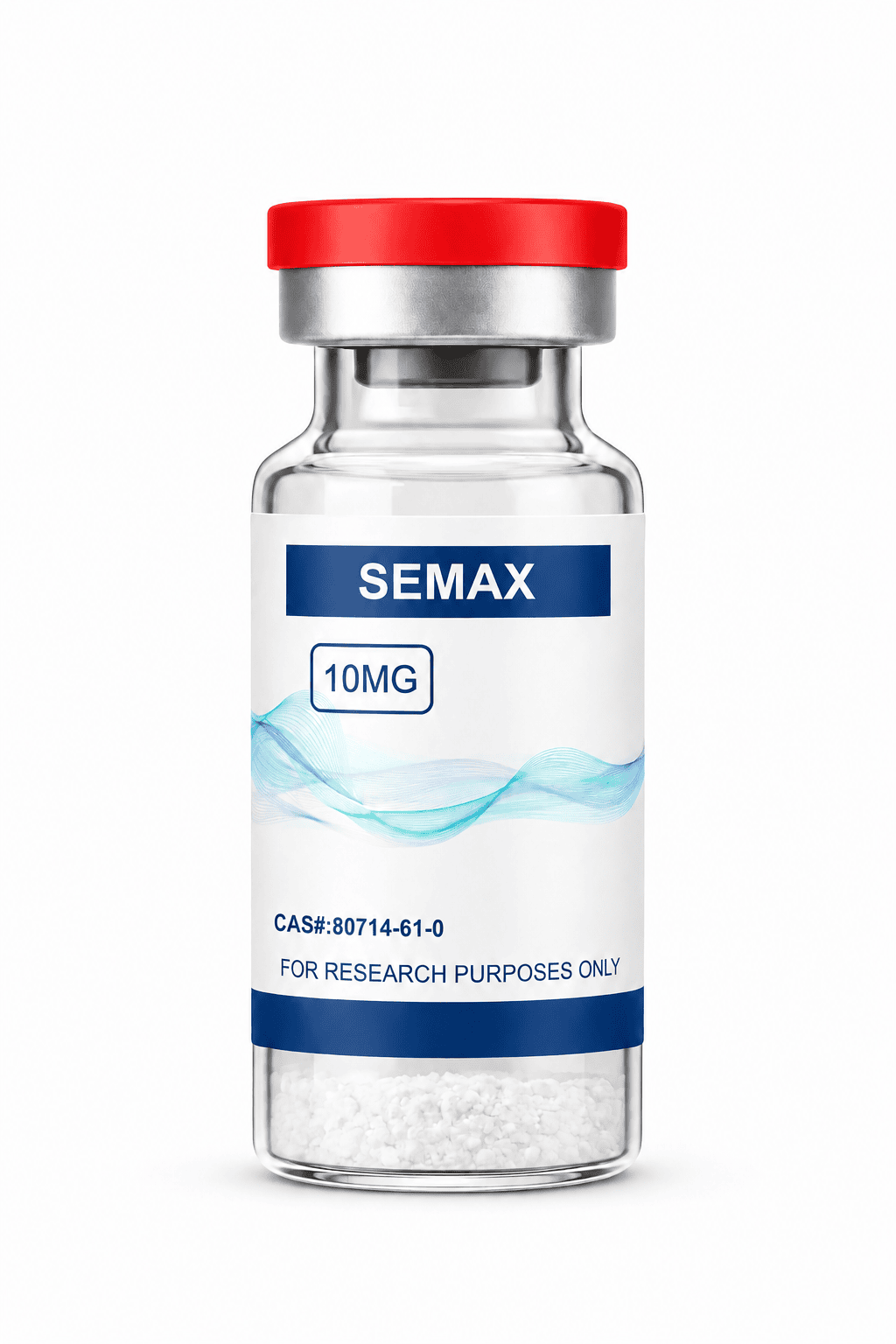
10mg — lyophilized powder
10mg — lyophilized powder
| Format | Net Quantity | Physical Form |
|---|---|---|
| Semax 10mg | 10 mg / vial | Lyophilized powder |
Sourced from a verified batch. Quantity for use should be determined based on your specific in vitro research protocol by qualified research personnel.
Laboratory Storage
Controlled storage conditions for lyophilized material
Controlled storage conditions for lyophilized material
Store sealed lyophilized material under controlled laboratory conditions in accordance with validated institutional SOPs and applicable technical documentation. Protect from moisture and light. Handling conditions should be established by qualified research personnel in accordance with the specific experimental protocol.
Note: No preparation, reconstitution, or administration instructions are provided. This compound is supplied for in vitro laboratory research use only. All handling must be conducted by qualified personnel following institutional safety protocols.
Research Literature
Scientific references & related resources
Scientific references & related resources
Semax Research Peptide Overview — NexPept compound overview and in vitro research context
PubMed — Semax / ACTH(4-7)-PGP — peer-reviewed scientific literature on neuropeptide signalling, MC4R pharmacology, and BDNF/NGF pathway modulation
Research Peptides in Canada — sourcing and research context for Canadian laboratories
What Are Research Peptides? — peptide classification and in vitro research context
This product is supplied exclusively for in vitro laboratory and non-clinical research use by qualified research personnel. It is not authorized by Health Canada for human or veterinary use. No therapeutic, clinical, or health claims are made.
This material must not be administered to humans or animals. No dosage, preparation, reconstitution, or administration instructions are provided or implied. All handling and use must be conducted by qualified personnel in accordance with applicable institutional policies and legal requirements.
Be the first to review “Semax 10mg”
Related products
Nootropic & Wellness Research
Reviews
There are no reviews yet.