
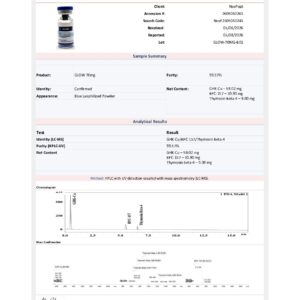
HPLC + MS
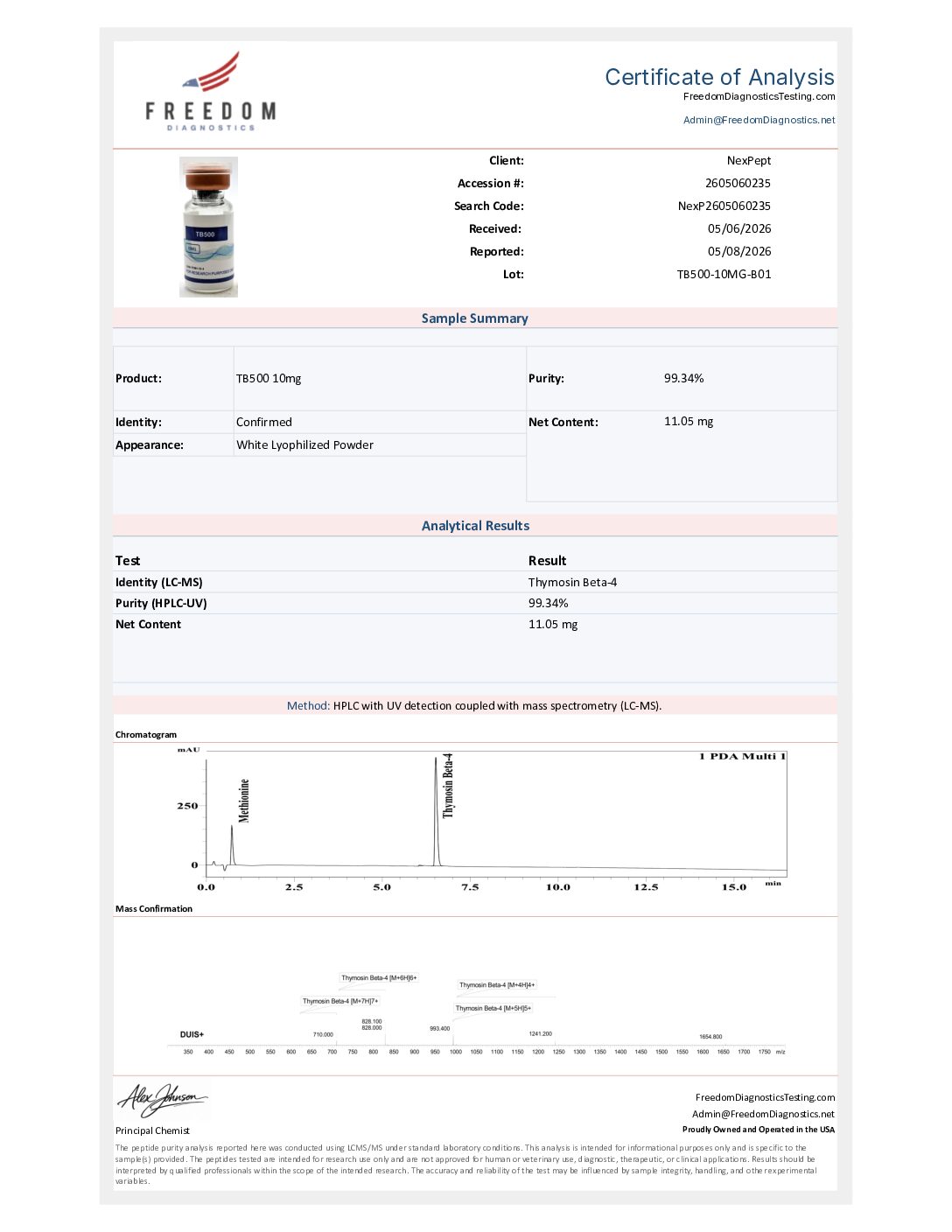
Independently tested for identity and purity
TB500-10MG-B01
May 8, 2026
99.34%
View Certificate of Analysis
CAS# 77591-33-4
Also Known As Thymosin Beta-4
Class Synthetic Thymic Peptide / G-Actin Sequestering Agent
Form Lyophilized Powder
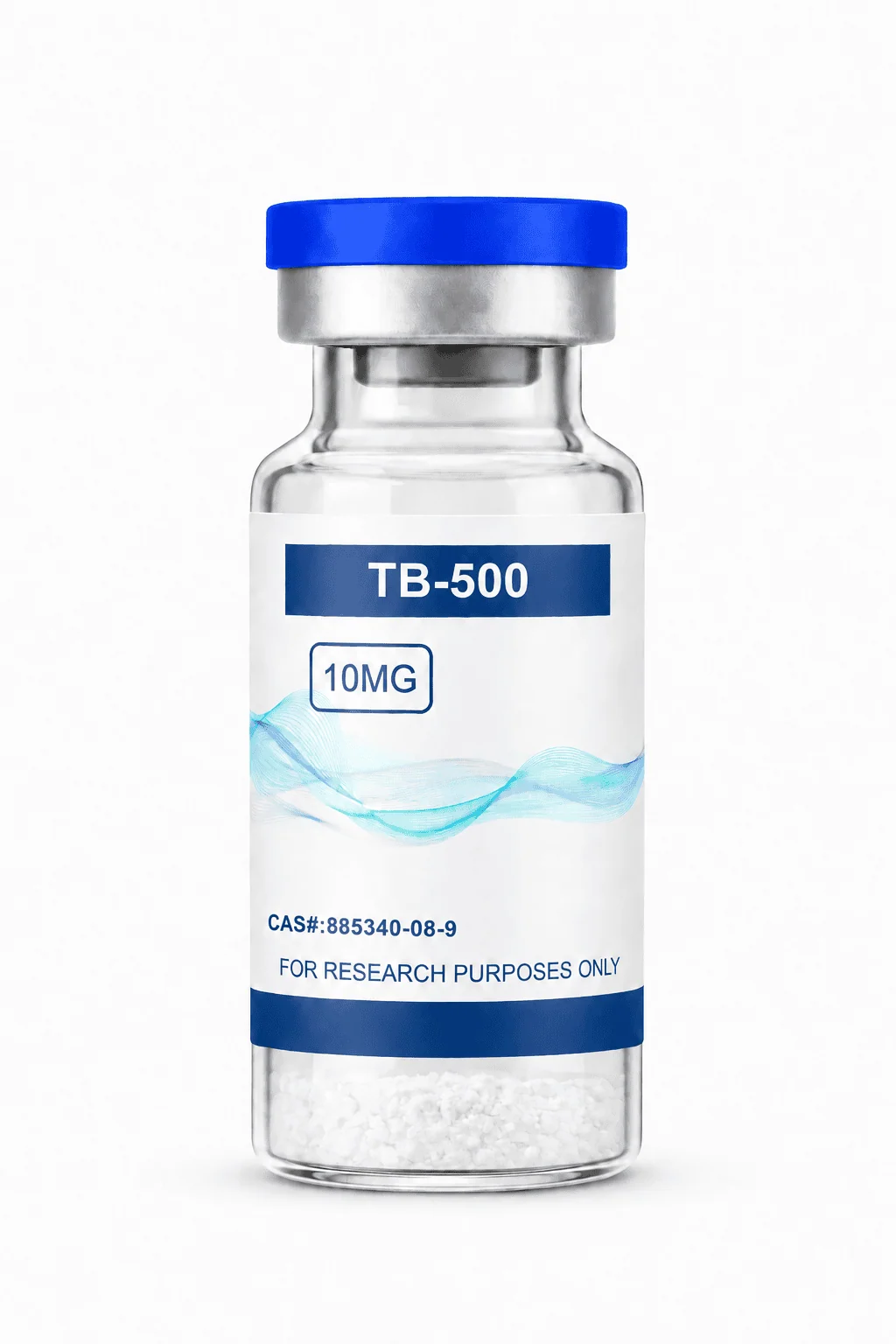
TB-500 (Thymosin Beta-4, CAS# 77591-33-4) is a synthetic 43-amino-acid thymic peptide corresponding to the endogenous Thymosin Beta-4 protein naturally abundant in platelets, wound fluid, and immune cells. TB-500 is the primary G-actin sequestering peptide in mammalian cells, regulating actin monomer availability and cytoskeletal dynamics through its central LKKTET actin-binding motif (residues 17–22). It is studied in preclinical research across actin cytoskeleton biology, cellular migration assays, angiogenesis pathway models, and integrin-linked kinase (ILK) signalling studies. Supplied by NexPept as a lyophilized powder for in vitro laboratory research use. This compound has not been authorized by Health Canada for any therapeutic, clinical, or human use.
Molecular Profile
CAS#, sequence, key motif, molecular weight, analytical data
CAS#, sequence, key motif, molecular weight, analytical data
| Property | Value |
|---|---|
| CAS Number | 77591-33-4 |
| Research Designation | TB-500; Thymosin Beta-4; Tβ4 |
| Compound Class | Synthetic thymic peptide — G-actin sequestering agent |
| Sequence Length | 43 amino acids |
| Molecular Weight | ~4964 Da |
| Key Actin-Binding Motif | LKKTET (residues 17–22) — the minimal sequence responsible for G-actin sequestration activity |
| Peptide Origin | Endogenous — abundant in platelets, wound fluid, macrophages, and thymic epithelium |
| Primary Research Targets | G-actin (monomeric actin); ILK (integrin-linked kinase); VEGF pathway interactions |
| Physical Form | Lyophilized powder |
| Analytical Method | High-Performance Liquid Chromatography (HPLC) + Mass Spectrometry (MS) |
| Appearance | White to off-white lyophilized solid |
In Vitro Research Context
Actin biology & cellular signalling models — laboratory use only
Actin biology & cellular signalling models — laboratory use only
TB-500’s central hexapeptide motif, LKKTET (Leu-Lys-Lys-Thr-Glu-Thr, residues 17–22), constitutes the minimal sequence required for high-affinity G-actin sequestration. This motif inserts into the hydrophobic cleft between subdomains 1 and 3 of monomeric G-actin, blocking the barbed end of the actin filament and preventing polymerisation. By controlling the ratio of G-actin to F-actin, TB-500 modulates cytoskeletal dynamics, cell shape, and motility in cellular models. The LKKTET motif has been used as a standalone research fragment in structure–activity studies to dissect the minimal actin-binding requirements of the full 43-AA peptide.
TB-500 is the principal tool compound for studying G-actin sequestration, G/F-actin ratio modulation, and cytoskeletal remodelling dynamics in cell-based assays. It is used in studies examining actin polymerisation kinetics, filament turnover, and lamellipodia formation.
By modulating G-actin availability and cytoskeletal organisation, TB-500 is studied in scratch assay (wound closure) models, transwell migration assays, and chemotaxis studies in fibroblast, endothelial, and epithelial cell lines.
TB-500 interacts with VEGF-mediated angiogenic signalling pathways in vitro. It is studied in endothelial tube formation assays and endothelial cell sprouting models as a tool for investigating peptide–cytoskeleton interactions in angiogenic pathway research.
TB-500 interacts with integrin-linked kinase (ILK) in cellular models, with downstream effects on AKT and GSK-3β phosphorylation. ILK pathway studies using TB-500 explore the mechanistic link between actin dynamics and integrin-mediated outside-in signalling.
TB-500 is one of the most well-characterised actin-regulating peptides in the preclinical research literature, with a publication record spanning actin biochemistry, cell biology, vascular biology, and wound biology in vitro models. Its dual role — as both a cytoskeletal regulator and a peptide with broader cell-signalling interactions via ILK and VEGF pathways — makes it a versatile tool compound for multi-pathway cellular research designs.
Research context: TB-500 is an investigational synthetic thymic peptide studied in scientific research involving actin cytoskeleton biology, cellular migration models, and angiogenesis pathway assays. It has not been authorized by Health Canada for human or veterinary use.
Available Formats
10mg — lyophilized powder
10mg — lyophilized powder
| Format | Net Quantity | Physical Form |
|---|---|---|
| TB-500 10mg | 10 mg / vial | Lyophilized powder |
Sourced from a verified batch. Quantity for use should be determined based on your specific in vitro research protocol by qualified research personnel.
Laboratory Storage
Controlled storage conditions for lyophilized material
Controlled storage conditions for lyophilized material
Store sealed lyophilized material under controlled laboratory conditions in accordance with validated institutional SOPs and applicable technical documentation. Protect from light and moisture. As a 43-AA peptide of moderate size, TB-500 should be handled to avoid repeated freeze-thaw cycles once reconstituted in the laboratory, as these can affect peptide structural integrity. Handling conditions should be established by qualified research personnel in accordance with the specific experimental protocol.
Note: No preparation, reconstitution, or administration instructions are provided. This compound is supplied for in vitro laboratory research use only. All handling must be conducted by qualified personnel following institutional safety protocols.
Research Literature
Scientific references & related resources
Scientific references & related resources
TB-500 Research Peptide Overview — NexPept compound overview and in vitro research context
PubMed — Thymosin Beta-4 / TB-500 — peer-reviewed scientific literature on actin sequestration, cellular migration, and signalling research
Research Peptides in Canada — sourcing and research context for Canadian laboratories
What Are Research Peptides? — peptide classification and in vitro research context
This product is supplied exclusively for in vitro laboratory and non-clinical research use by qualified research personnel. It is not authorized by Health Canada for human or veterinary use. No therapeutic, clinical, or health claims are made.
This material must not be administered to humans or animals. No dosage, preparation, reconstitution, or administration instructions are provided or implied. All handling and use must be conducted by qualified personnel in accordance with applicable institutional policies and legal requirements.
Be the first to review “TB-500 10mg”
Related products
Reviews
There are no reviews yet.