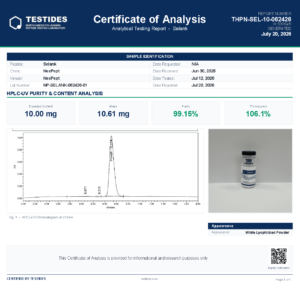
HPLC + MS
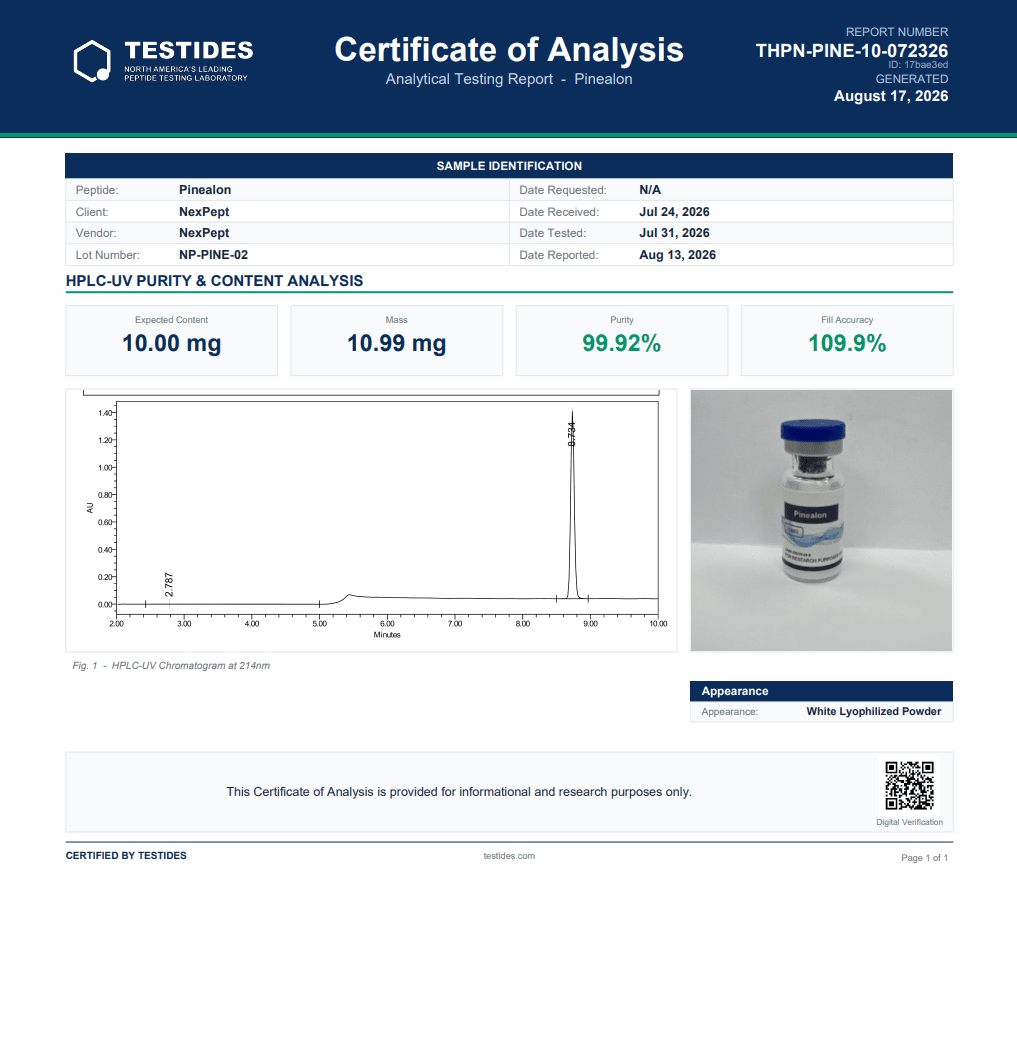
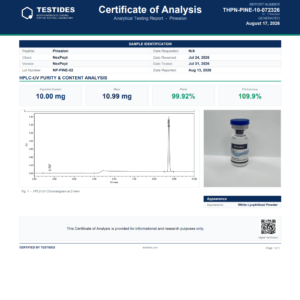
Independently tested for identity and purity
NP-PINE-02
Aug 17, 2026
99.92%
View Certificate of Analysis
|
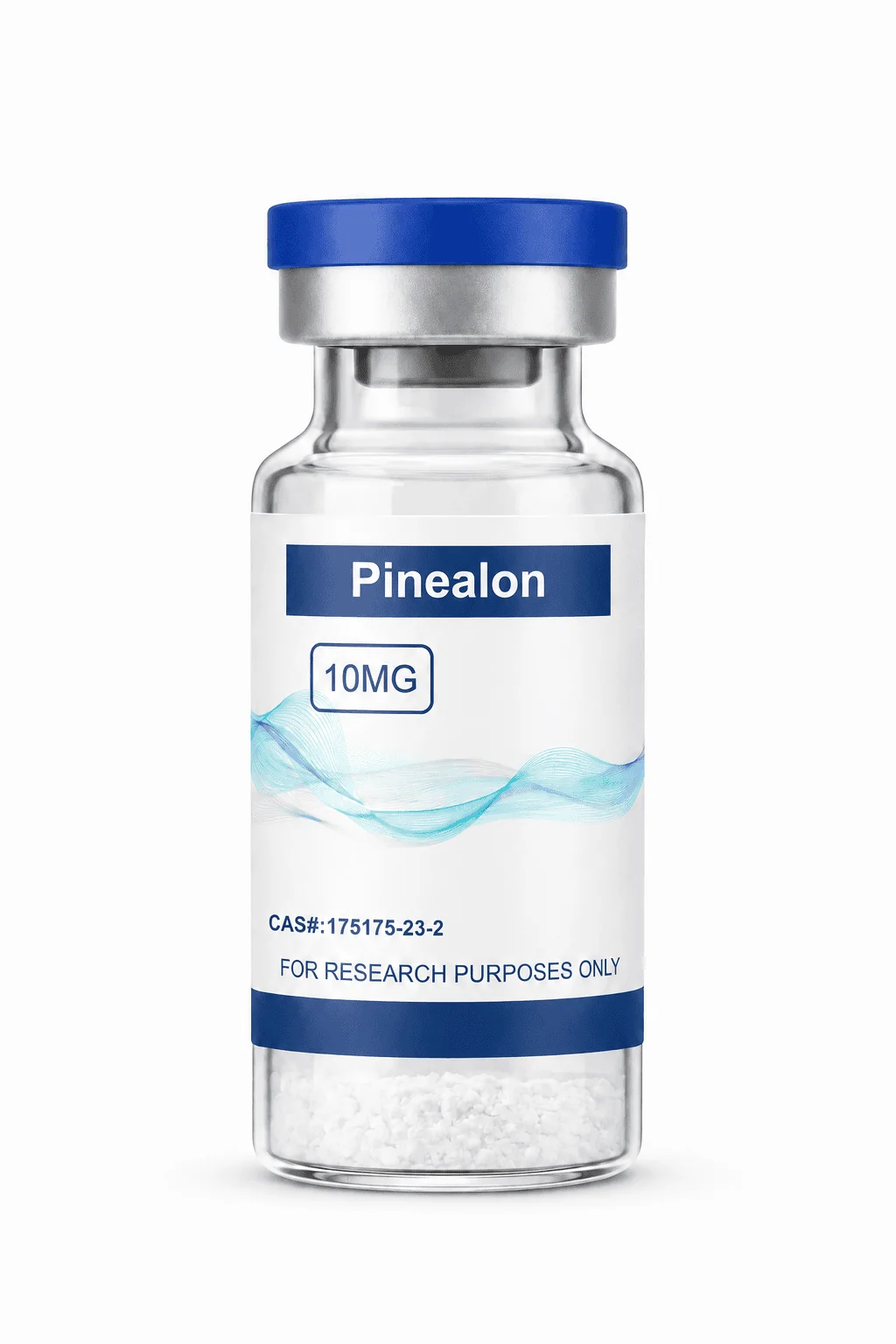
Glu-Asp-Arg (EDR) Tripeptide
Pinealon is a synthetic tripeptide replicating the Glu-Asp-Arg (EDR) sequence first identified in bovine pineal gland tissue. As a short-chain bioregulator peptide studied primarily by the Khavinson group, it has been investigated in in vitro and in vivo research models examining chromatin binding, neuroprotective signalling, and neuroendocrine regulation. Its minimal three-residue scaffold enables cell membrane penetration and proposed DNA minor-groove interactions relevant to epigenetic regulatory research.
Molecular Profile
| Property | Detail |
|---|---|
| Sequence | Glu-Asp-Arg (EDR) |
| Single-Letter Code | E-D-R |
| Residue Count | 3 AA (tripeptide) |
| Molecular Formula | C₁₅H₂₆N₆O₈ |
| Molecular Weight | ~418.4 Da |
| CAS Number | 64928-22-9 |
| Also Known As | EDR Peptide; Pinealon Tripeptide |
| Origin | Bovine pineal gland–derived; fully synthetic analogue |
| Format | Lyophilized Powder — 10 mg/vial |
| Purity | ≥98% (HPLC) |
Research Targets & Proposed Mechanisms
Research Context
- →Isolated from bovine pineal gland and characterised as a tripeptide bioregulator by the Khavinson group (St. Petersburg Institute of Bioregulation and Gerontology)
- →Studied in neural cell culture models investigating peptide-chromatin interactions and proposed epigenetic mechanisms
- →Investigated in aged animal models alongside Epithalon and other short peptide bioregulators in longevity-focused preclinical research
- →Proposed mechanism involves DNA minor-groove binding by the Glu and Asp residues, with Arg contributing electrostatic complementarity to the phosphate backbone
- →Cell-penetrating properties of the tripeptide scaffold studied in context of blood-brain barrier permeability models
Storage & Handling
Store sealed lyophilized material under controlled laboratory conditions in accordance with validated institutional SOPs and applicable technical documentation. Protect from light and moisture.
- →Keep in original sealed vial until use in research protocols
- →The acidic Glu and Asp residues render the lyophilized powder hygroscopic — minimise atmospheric exposure during handling
- →Handle in accordance with institutional biosafety and chemical handling guidelines
Literature & Resources
- →Khavinson VKh et al. “Short peptides stimulate gene expression in aging organisms.” Bulletin of Experimental Biology and Medicine, 2013 — PMID 23658896
- →Khavinson V et al. “Peptide regulation of gene expression and protein synthesis in bronchial epithelium.” Peptides, 2007 — PMID 17499888
- →PubChem Compound — Glu-Asp-Arg (CID 10273502): pubchem.ncbi.nlm.nih.gov
Be the first to review “PINEALON 10MG”
Related products
Nootropic & Wellness Research
Reviews
There are no reviews yet.