
|
Thymalfasin — N-Acetylated Thymic Polypeptide
Thymosin Alpha-1 (Tα1; Thymalfasin) is a 28-residue N-terminally acetylated polypeptide originally isolated from bovine thymus fraction 5 by Goldstein and Low in 1977. As the primary biologically active component of thymosin fraction 5, it is among the most studied immunomodulatory peptides in preclinical research, with proposed actions at Toll-like receptors (TLR2, TLR9) and downstream NF-κB/cytokine signalling pathways. Its sequence is fully conserved across human, mouse, rat, and bovine species, making it an important tool compound in cross-species immunological research models.
Molecular Profile
| Property | Detail |
|---|---|
| Sequence | Ac-Ser-Asp-Ala-Ala-Val-Asp-Thr-Ser-Ser-Glu-Ile-Thr-Thr-Lys-Asp-Leu-Lys-Glu-Lys-Lys-Glu-Val-Val-Glu-Glu-Ala-Glu-Asn-OH |
| Single-Letter Code | Ac-SDAAVDTSSEITTKDLKEKK EVVEAEN-OH |
| Residue Count | 28 AA (polypeptide) |
| N-Terminus | Acetylated (Ac-Ser¹); C-terminus free acid |
| Molecular Formula | C₁₂₉H₂₁₅N₃₃O₅₅ |
| Molecular Weight | ~3108.4 Da |
| CAS Number | 62304-98-7 |
| Also Known As | Thymalfasin; Tα1; Zadaxin (clinical name) |
| Species Conservation | Identical sequence in human, mouse, rat, bovine |
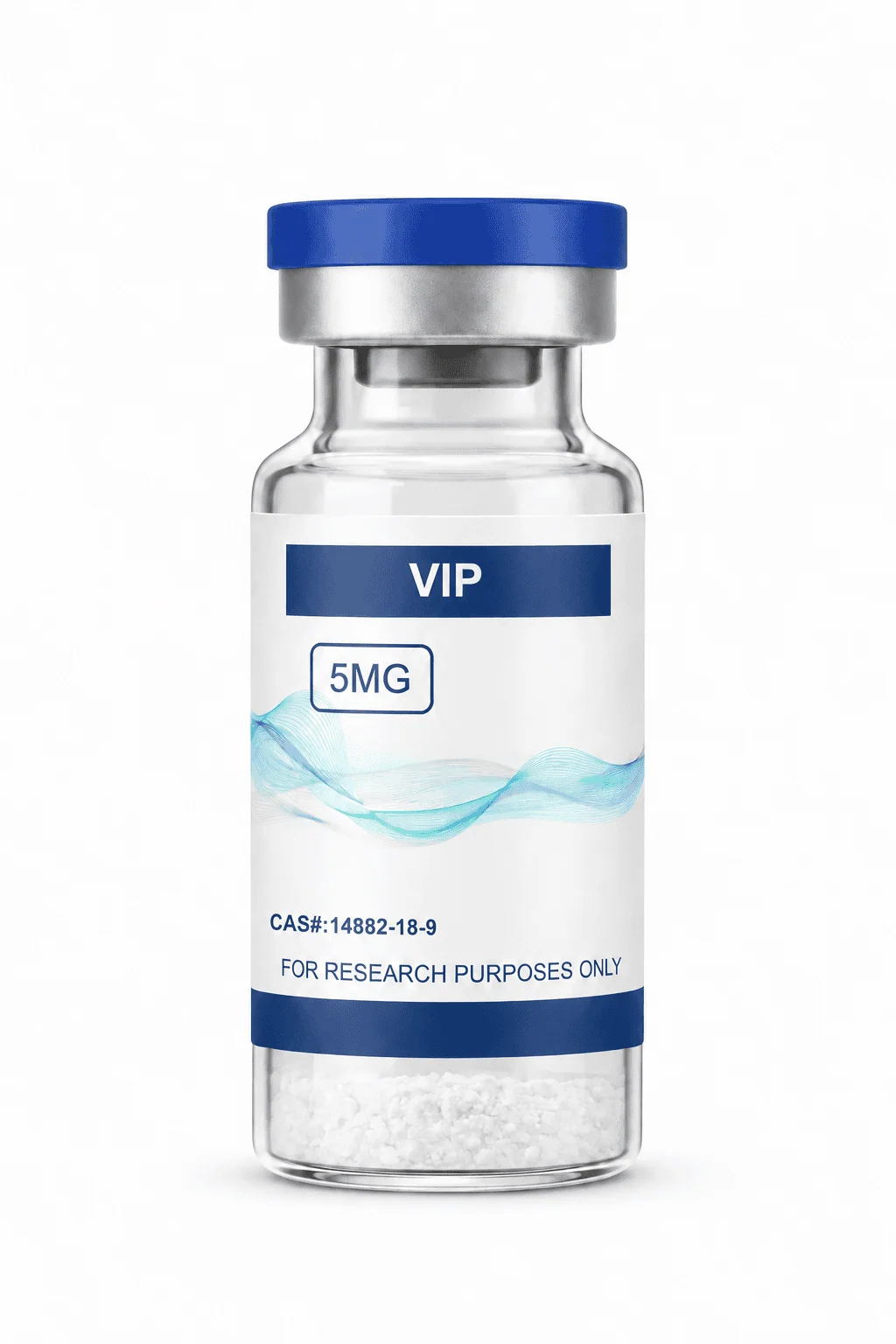
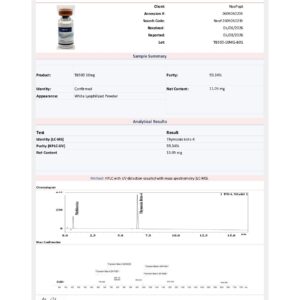
| Format | Lyophilized Powder — 5 mg/vial |
| Purity | ≥98% (HPLC) |
Research Targets & Proposed Mechanisms
Research Context
- →First isolated from bovine thymus fraction 5 by Allan Goldstein and Loui Low (George Washington University, 1977); subsequently identified as the principal active component of the fraction
- →Studied extensively in viral immunology models; used as a reference immunomodulatory peptide in hepatitis B and C research alongside interferon-based regimens
- →Investigated in tumour immunology research; examined for potential adjuvant properties in cancer vaccine and checkpoint inhibitor model systems
- →Used in ageing immunology research to study thymic involution, T-cell repertoire diversity, and age-associated immune dysregulation
- →Approved as Zadaxin (SciClone Pharmaceuticals) in over 35 countries for hepatitis B and C and as an adjuvant to chemotherapy; provides an extensive translational research data set
Storage & Handling
Store sealed lyophilized material under controlled laboratory conditions in accordance with validated institutional SOPs and applicable technical documentation. Protect from light and moisture.
- →Keep in original sealed vial until use in research protocols
- →The acidic residue-rich sequence (Asp, Glu) renders the lyophilized material hygroscopic; minimise atmospheric exposure during handling
- →Handle in accordance with institutional biosafety and chemical handling guidelines
Literature & Resources
- →Goldstein AL et al. “Isolation, characterization, and biological effects of thymosin α1 from thymosin fraction 5.” Ann N Y Acad Sci, 1977 — PMID 212001
- →Garaci E et al. “Thymosin α1 in the treatment of cancer: from basic research to clinical application.” Int J Immunopharmacol, 2000 — PMID 10736416
- →Dominari A et al. “Thymosin alpha 1: a comprehensive review of the literature.” World J Virol, 2020 — PMID 33362997
- →PubChem Compound — Thymosin Alpha-1 (CID 16133850): pubchem.ncbi.nlm.nih.gov
Be the first to review “VIP 5MG”
Related products
Reviews
There are no reviews yet.